Rehearsing the Retreat: Why Your Rollback Plan Needs Its Own Test Flight
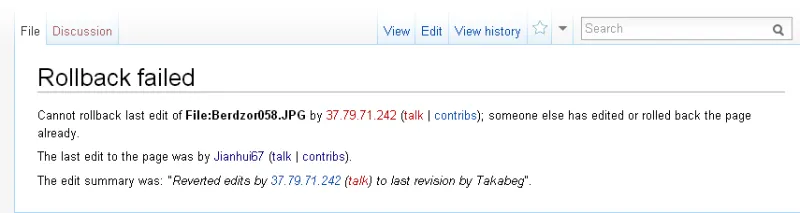
Photo: Jianhui67, CC BY-SA 4.0, via Wikimedia Commons
On launch night, the forward path gets the attention. Teams test signup, checkout, deployment, and the first customer journey with a diligence that borders on devotion. The retreat - rollback, feature-flag reversal, data restoration - often appears as a single line in a runbook: roll back if needed. That line is not a plan. It is a hope.
In aviation, a go-around is not an admission of defeat. It is a trained maneuver with its own callouts, checklist, and decision points. Pilots rehearse it because the moment that demands a go-around is rarely the moment for improvisation. Software organizations have adopted the language of flight testing - preflight checks, launch windows, abort criteria - without adopting the discipline of rehearsing the retreat. As US product teams prepare high-stakes 2026 releases, the most dangerous untested feature in the release may be the way back.
The Forward-Only Test Culture
Most test plans are directional. They assert that a user can create an account, that a payment can clear, that a container can start, that a confirmation email can arrive. Very few assert that the system can return to a known-good state after a partial release, or that a database can be restored without erasing the previous hour of customer activity. The asymmetry is structural: forward behavior is visible in demos, while rollback behavior becomes visible only when something has already gone wrong.
Feature flags have made the problem subtler. A flag implies reversibility, so teams stop rehearsing deployment rollback. But turning a flag off is not the same as restoring the previous release. Flags interact with cached configuration, background jobs, third-party integrations, and partially migrated data. If the off position has never been exercised with production-shaped traffic, the team has a belief, not a capability.
Why Rollback Is a Feature
A feature has states, transitions, acceptance criteria, telemetry, and an owner. A rollback has all of these. It has a trigger, a sequence, a verification step, and a customer-visible outcome. It can be fast or slow, clean or destructive. It can leave orphaned records, duplicate charges, or sessions that point at a version that no longer exists. Treating rollback as a contingency rather than a feature is how organizations end up debugging their escape route at the worst possible moment.
The practical consequence is that rollback plans are often written by the people least able to test them and approved by people least likely to execute them. A launch review may ask whether rollback is possible. It rarely asks when it was last performed, by whom, under what conditions, and with what measured recovery time.
Three Layers That Fail Independently
The application layer is the most familiar. Can the previous artifact be redeployed with its dependencies pinned? Are container images retained long enough to be useful? Do CDN and edge caches serve the old assets after the switch? A rollback that restores code but not static assets can produce a hybrid state that is harder to diagnose than the original defect.
The data layer is less forgiving. Did the release include a schema change that is not backward compatible? Is there an expand-contract path, or has the team passed a point of no return? Backups are not a rollback plan unless someone has measured how long restoration takes and how much customer activity will be lost. In US retail and payments systems, even a brief restoration window can mean abandoned carts, duplicated authorizations, and support queues that grow faster than the incident bridge.
The configuration layer is the quietest. What else changed besides the flag - secrets, queue names, third-party keys, rate limits, routing rules? A rollback that restores code but leaves new configuration in place is a partial retreat. Partial retreats are how small incidents become long ones.
Decision Authority at 2 A.M.
The most common rollback failure is not technical. It is social. At 2 a.m. Eastern on a launch night, no one wants to be the person who calls the go-around. The engineer who built the feature is optimistic. The product manager fears the announcement. The on-call lead may be missing context. Without pre-agreed triggers and named authority, the team debates while customers experience the defect.
A rollback authority matrix fixes this. It names a primary decision-maker and a backup. It sets numeric triggers - error rate, checkout failure rate, support ticket velocity, synthetic transaction failures - that convert judgment into a defined threshold. It establishes a communication tree that does not require consensus. The goal is not to make rollback automatic. The goal is to make the decision timely and legible.
A Rollback Drill Checklist for 2026 Launch Teams
- Schedule the drill at least ten business days before launch, not the night before.
- Use a production-like environment with production-shaped data, masked according to policy.
- Deploy the release candidate, then execute the documented rollback while timing every step.
- Rehearse feature-flag reversal separately from artifact rollback; they are different maneuvers.
- Test the data path: backward-compatible migration, restore from backup, or forward-fix. Measure restore time and data loss.
- Simulate a partial rollback - one service, one US region, one customer segment - before attempting the whole system.
- Include support, sales, and status-page owners in drill communications, not just engineering.
- Verify customer-visible state afterward: sessions, carts, subscriptions, permissions, and queued jobs.
- Record detection time, decision time, execution time, and verification time. Assign owners to every gap.
- Set a no-go threshold: if the drill cannot meet the target recovery time, delay the launch.
What a Successful Drill Proves
A successful drill does not prove that rollback is painless. It proves that the organization can recognize, decide, execute, and verify under pressure. The output is a measured recovery time, a list of failed steps, and a credible answer to the question every executive asks after a bad deploy: can we put it back?
A rollback plan that has never been executed is a hypothesis. A drill turns it into a procedure. The go-around you never rehearsed is the one that ends the flight. Schedule the rehearsal while the weather is still good.