Dashboard Green, Users Screaming: The Dangerous Gap Between Monitoring Metrics and Real-World Experience
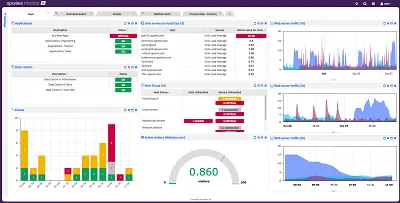
Photo: Goojannii, CC BY-SA 4.0, via Wikimedia Commons
There is a particular species of organizational confidence that forms around a monitoring dashboard showing green. Server response times nominal. Error rates within threshold. Uptime at 99.97 percent. The on-call engineer checks the board, sees nothing alarming, and returns to other work. Meanwhile, somewhere in the actual product, users are encountering something the dashboard cannot see, cannot name, and was never designed to detect.
This is not a story about monitoring tools failing at their stated purpose. Most modern observability platforms perform exactly as advertised. The more unsettling truth is that they are advertised for the wrong job.
What Monitoring Systems Are Actually Built to Do
Application performance monitoring, log aggregation, synthetic transaction checks, uptime trackers—these tools share a foundational design assumption: that the team deploying them already understands which signals matter. An alert fires when a pre-defined threshold is crossed. A dashboard turns red when a metric engineering has chosen to track moves outside an acceptable range.
This architecture is enormously effective for catching known failure modes. If your database query times have historically spiked before an outage, you build an alert around query time. If your payment processor returns a specific error code when it goes down, you watch for that code. The monitoring stack becomes a catalog of past disasters, each one enshrined in an alert rule written in its wake.
The problem emerges at the edge of that catalog. The failure mode that has never happened before—the one that doesn't produce a server error, doesn't spike CPU utilization, doesn't trip a latency threshold—arrives without a single indicator turning red. The dashboard remains green. The on-call queue stays quiet. And users encounter something the entire monitoring infrastructure was not built to see.
The Metrics That Looked Fine While Everything Fell Apart
Consider the pattern that has emerged repeatedly across enterprise software launches in the United States over the past several years. A product ships with robust telemetry. Engineering leadership reviews dashboards in the hours following release and finds nothing alarming. Then, somewhere between twelve and seventy-two hours post-launch, support volume spikes. User trust scores drop. Churn begins.
Post-mortems from these events share a common revelation: the degradation was visible in user behavior long before it appeared in any system metric. Session abandonment rates climbed. Specific workflow completion rates declined. Users began arriving at help documentation pages they had never visited before. None of these signals were wired to an alert. In several cases, the data was being collected—it simply wasn't being watched.
One pattern worth examining closely involves multi-step user workflows in B2B software platforms. Monitoring systems typically track the health of individual API calls. They do not, by default, track whether a user who initiated a five-step workflow on Monday successfully completed it by Friday. A user who abandons a workflow at step three because of a confusing interface change generates no error. No exception is thrown. No threshold is crossed. The monitoring system has nothing to report. The user has, however, already decided the product does not work.
This is the category of failure that lives entirely below the waterline of conventional observability.
Why Beta Programs See What Dashboards Cannot
The argument for structured beta testing has historically been framed around catching bugs before they reach production. That framing undersells the actual value—and subtly mischaracterizes what beta programs are doing when they work well.
A well-designed beta program does not primarily function as a bug-catching filter. It functions as a behavioral intelligence system. Real users, operating under real conditions, with real goals and real frustrations, interact with a product in ways that no synthetic transaction can replicate and no alert threshold can anticipate. The bugs they find are not failures of the monitoring system. They are signals the monitoring system was structurally incapable of generating.
When a beta participant in a mid-sized US market reports that a feature "feels broken" even though it technically completes its function, that report contains information no dashboard will ever surface. When a cohort of beta users consistently fails to discover a feature that product management considers central to the value proposition, that behavioral pattern is a leading indicator of post-launch churn—one that arrives weeks before any retention metric would register concern.
Treating these signals as leading indicators, rather than as anecdotal complaints to be triaged after launch, requires a philosophical shift in how organizations think about the relationship between testing and monitoring.
The Alerting Trap: Optimizing for Known Failure
There is an institutional logic that makes over-reliance on monitoring dashboards almost inevitable. Alert systems are quantifiable. They produce reports. They justify headcount. They can be demonstrated to leadership in a thirty-minute meeting. Beta feedback is messier—qualitative, sometimes contradictory, requiring interpretation rather than simple threshold comparison.
Organizations under launch pressure reliably choose the cleaner signal. This is rational in the short term and dangerous in aggregate. Each launch cycle that prioritizes dashboard metrics over user-discovered signals trains the organization to treat monitoring as a proxy for product health rather than a partial and incomplete view of system behavior.
The consequence is a gradual narrowing of what the organization knows how to see. Alert rules accumulate. Dashboards grow more sophisticated. And the category of failure that lives in user experience—in the gap between a technically correct function and an actually usable one—remains perpetually invisible.
Reframing User-Discovered Bugs as Intelligence, Not Embarrassment
The cultural reflex in many engineering organizations is to treat a bug discovered by a user as an indictment of the QA process. Something was missed. A gap existed. The narrative is one of failure.
This framing is counterproductive and, more importantly, incorrect. A user-discovered bug during a structured beta program is not evidence that testing failed. It is evidence that the testing program is producing the kind of intelligence that monitoring infrastructure cannot generate on its own. The appropriate response is not defensiveness—it is systematic capture, analysis, and integration of that signal into the product development process.
Organizations that treat beta-discovered issues as valuable leading indicators rather than embarrassing oversights build a qualitatively different relationship with their pre-launch testing programs. They instrument beta cohorts to surface behavioral patterns, not just error reports. They analyze where users hesitate, where they abandon, where they succeed through workarounds rather than intended pathways. They arrive at launch with a picture of actual product experience that no monitoring dashboard, however sophisticated, could have provided.
The Question Every Dashboard Leaves Unanswered
Every monitoring system answers a version of the same question: is the infrastructure behaving the way we expect? This is a necessary question. It is not a sufficient one.
The question that dashboards cannot answer—and that structured beta programs are uniquely positioned to address—is whether the product, functioning exactly as designed, is delivering the experience users require to trust it, adopt it, and continue using it.
That question does not have a threshold. It does not have an alert rule. It has users, and it has the programs designed to listen to them before the launch window closes.
A monitoring system that stays green while users suffer is not a failed system. It is a correctly functioning system answering the wrong question. The obligation falls on product and engineering leadership to ensure that someone, somewhere in the pre-launch process, is asking the right one.